 Save
Save The smell of baking pizza dough somehow triggers something primal in my brain. I developed these protein packed rolls during a phase where I was trying to eat better but refused to give up comfort food. My roommate walked in while I was testing the recipe, took one bite, and asked if I'd been hiding culinary school training. That was the moment I knew this dough hack was worth perfecting.
Last football season, I made a double batch for friends coming over to watch the game. They disappeared so fast I barely got one myself, and now my group demands them for every gathering. Something about pulling apart warm, cheesy rolls makes people instantly comfortable, like they're at their favorite pizza joint but better.
Ingredients
- Plain Greek yogurt: The magic ingredient that creates an incredibly tender dough while packing in serious protein—nonfat or low fat works perfectly here
- Self-rising flour: Already contains the leavening you need, but if you only have all-purpose, just add baking powder and salt
- Lean ground beef: I use the 5% fat or less version because you'll get plenty of richness from the cheese and pepperoni
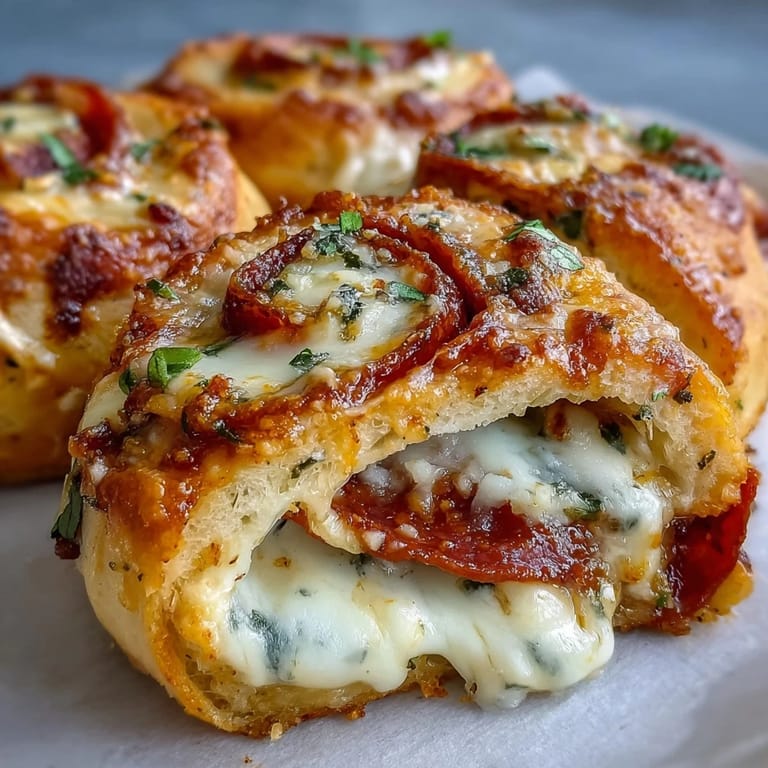
- Turkey or beef pepperoni: Turkey pepperoni has less fat but still delivers that classic pizza flavor and pretty red spirals
- Part-skim mozzarella: Melts beautifully without making the rolls overly greasy
- Pizza sauce: Use your favorite brand or homemade—just not too watery or the dough will get soggy
- Dried Italian herbs: Oregano and basil are nonnegotiable for that authentic pizza taste
Tired of Takeout? 🥡
Get 10 meals you can make faster than delivery arrives. Seriously.
One email. No spam. Unsubscribe anytime.
Instructions
- Preheat and prepare your workspace:
- Set your oven to 400°F and line a baking sheet with parchment paper—this prevents sticking and makes cleanup effortless
- Cook the beef:
- Brown the lean ground beef in a nonstick skillet over medium heat, breaking it up with your spoon as it cooks for about 4–5 minutes
- Season the meat:
- Drain any excess fat, then stir in black pepper and Italian herbs before setting it aside to cool slightly
- Mix the dough:
- Combine Greek yogurt, self-rising flour, egg, garlic powder, and salt in a large bowl until a sticky dough forms
- Knead to smooth:
- Turn the dough onto a lightly floured surface and knead for 2–3 minutes until it becomes smooth and workable
- Roll into rectangle:
- Use a rolling pin to shape the dough into approximately a 12 x 10 inch rectangle, keeping it fairly even in thickness
- Layer the sauce:
- Spread pizza sauce evenly across the dough, leaving a 1/2 inch border around the edges
- Add the filling:
- Scatter the cooked beef, pepperoni slices, and mozzarella cheese evenly over the sauce
- Roll and slice:
- Starting from a long edge, tightly roll the dough into a log and cut into 12 equal pieces
- Top and bake:
- Arrange rolls cut-side up on your prepared sheet, brush with olive oil, sprinkle with Parmesan and herbs, then bake for 18–22 minutes until golden
 Save
Save My sister started making these weekly after I gave her the recipe, and her kids now request them for birthday dinner instead of cake. That's the power of a good pizza roll that doesn't leave you feeling heavy afterwards. I love watching people realize they can actually feel good after eating something this indulgent-tasting.
Making The Dough Work For You
The first time I made this dough, I panicked at how sticky it felt and kept adding flour, which resulted in dense, hockey puck rolls. Once I learned to trust the process and knead it briefly, the texture transformed completely. Your hands will get messy, but that's part of the experience. The Greek yogurt needs to fully incorporate with the flour to create that soft bread-like texture we're after.
Customizing Your Filling
These rolls are incredibly forgiving, so feel free to use whatever pizza toppings your family actually likes. I've added finely chopped bell peppers when I needed to use them up, and spinach works surprisingly well if you squeeze out the excess moisture first. Sometimes I switch up the meat entirely and use diced rotisserie chicken for a different protein profile. The key is keeping the filling well-distributed so each roll gets equal love.
Meal Prep Magic
These rolls reheat beautifully and actually develop more flavor overnight, making them perfect for busy weeks. I bake a double batch on Sunday and portion them into containers for grab-and-go lunches throughout the week. The texture holds up incredibly well, and they taste just as good on day five as they did fresh from the oven.
- Wrap cooled rolls individually in plastic wrap before freezing for easy single servings
- Reheat frozen rolls at 350°F for 10–12 minutes, or microwaved for 30–45 seconds if you're in a rush
- Store baked rolls in the refrigerator for up to 5 days in an airtight container
 Save
Save There's something deeply satisfying about pulling a batch of these out of the oven, all golden and bubbling, and knowing they're actually good for you. Hope they become a staple in your kitchen like they have in mine.
Kitchen Questions
- → What if I don't have self-rising flour?
You can easily make your own! Simply mix 2 cups of all-purpose flour with 3 teaspoons of baking powder and 1/2 teaspoon of salt. This will give you the leavening needed for the dough.
- → Can I use different meats or add vegetables to the filling?
Absolutely! Lean ground turkey or chicken can be substituted for beef. For extra flavor and nutrition, consider finely dicing bell peppers, mushrooms, or spinach and sautéing them before adding to the filling mixture.
- → How do I store and reheat leftover pizza rolls?
Once cooled, store any leftover rolls in an airtight container in the refrigerator for up to 3-4 days. They also freeze exceptionally well! To reheat from frozen, bake them at 350°F (175°C) for about 10-12 minutes, or until heated through.
- → My dough is too sticky or too dry, what should I do?
If your dough is too sticky, add a little more flour, a teaspoon at a time, until it's manageable. If it's too dry and crumbly, add a tiny splash of milk or water to bring it together. The Greek yogurt can vary in consistency, so minor adjustments are sometimes needed.
- → Can these be made gluten-free?
While the core recipe uses wheat flour, you could experiment with a gluten-free self-rising flour blend. Be aware that the texture might differ slightly, as gluten-free flours often absorb liquids differently and may require slight adjustments to the dough consistency.
- → Is there a way to make these spicier?
Yes, for an extra kick, increase the amount of crushed red pepper flakes in the filling. You could also add a dash of hot sauce to the pizza sauce, or include some thinly sliced jalapeños in the filling for a fresh, spicy element.